
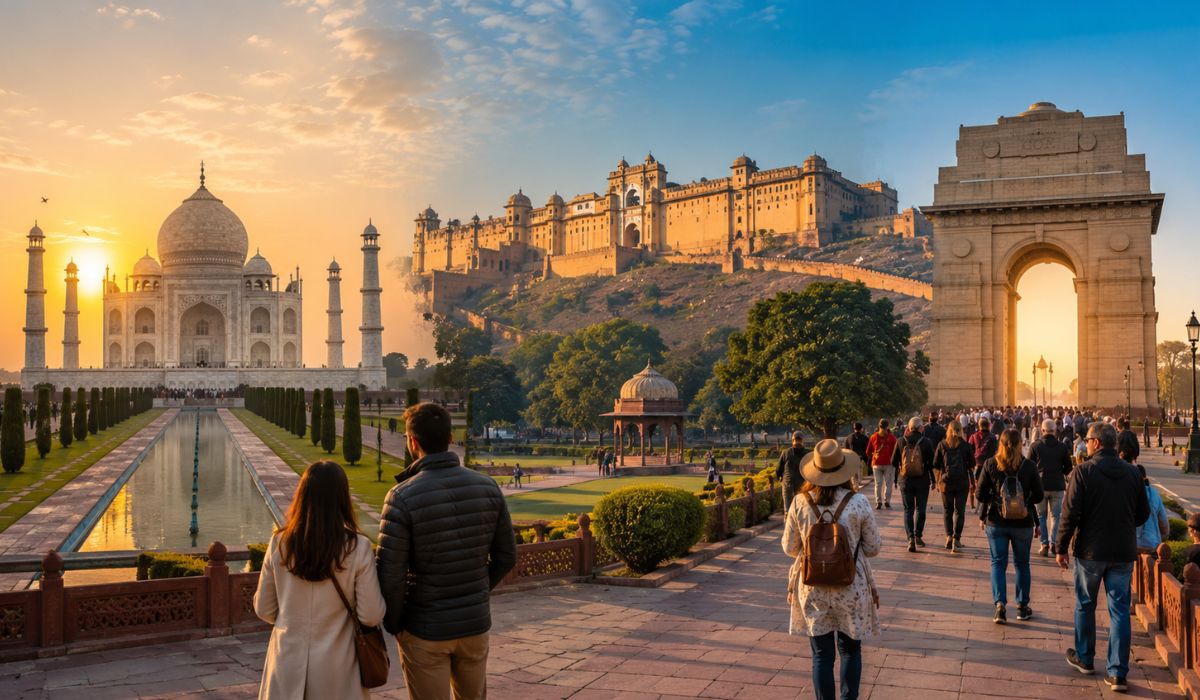
Planning a Golden Triangle Tour is exciting — until you realize that timing can make or break the experience. Get it right and you’ll photograph the Taj Mahal at sunrise under a crystal-clear sky. Get it wrong and you’ll be sweating through 45°C heat in Agra with shimmering heat haze and harsh sunlight reducing visibility.
Delhi, Agra, and Jaipur sit in the northern plains of India, which means they share similar weather patterns — intense summers, a monsoon season, and a genuinely pleasant winter. Unlike coastal or hill destinations, there’s no “any time works” answer here. The difference between visiting in October and visiting in May is night and day.
This guide breaks down every season, every month, and every type of traveler to help you pick the best window for your trip. Whether you’re a first-timer from the UK, a family from the US, or a solo photographer from Australia, the right timing is out there — you just need to know where to look.
Based on our experience helping international travelers plan Golden Triangle tours, the single most common regret we hear has nothing to do with itinerary choices — it’s arriving in the wrong month.
Slots fill up fast in peak season — secure your verified guide or tour today, one message away on WhatsApp.
💬 Chat on WhatsAppQuick Answer: Best Time for a Golden Triangle Tour
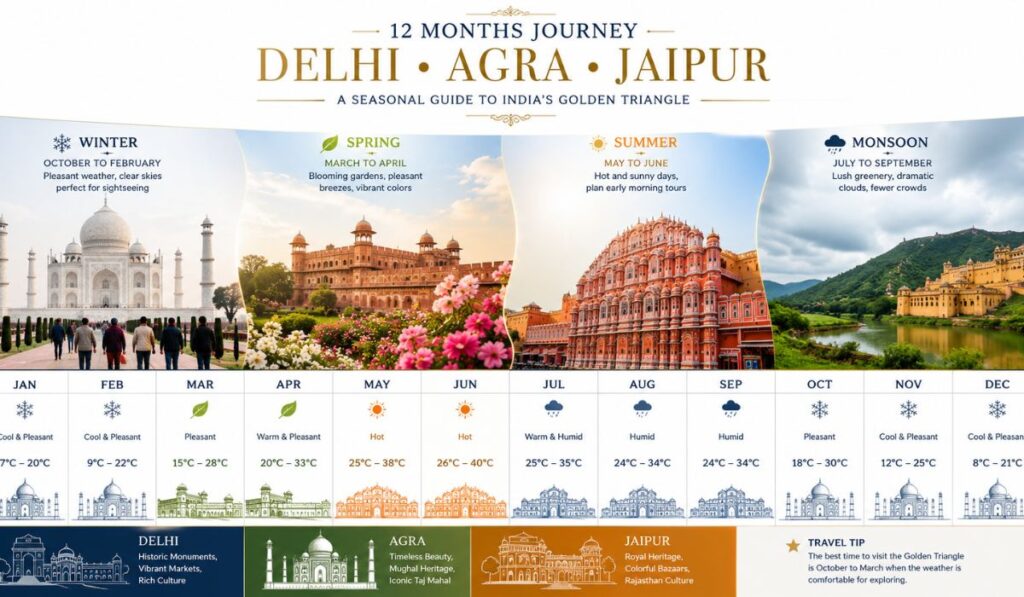
The best time for a Golden Triangle Tour is October to March. This six-month window offers cool, dry weather across Delhi, Agra, and Jaipur. Temperatures stay between 8°C and 25°C (46°F–77°F), making outdoor sightseeing comfortable. November and February are widely considered the peak sweet-spot months — offering pleasant weather and excellent conditions for exploring monuments, gardens, and local markets. December and January are especially popular with international visitors, so some attractions may be busier than usual, but the comfortable climate makes it well worth the visit.
Less preferred: May and June are the hottest months, with temperatures often reaching 40–47°C (104–117°F), making daytime sightseeing more demanding. July and August bring the monsoon season, with occasional heavy showers and higher humidity. While rain can sometimes interrupt outdoor plans, it also transforms many gardens and landscapes into lush green scenery and often means fewer crowds.
Golden Triangle Weather by Season
| Season | Months | Temperature Range | Conditions | Recommended? |
| Winter | Nov – Feb | 8°C – 22°C (46–72°F) | Cool, dry, mostly clear; occasional morning fog (mainly Dec–Jan) | Yes — Best time |
| Spring | Mar – Apr | 22°C – 35°C (72–95°F) | Warm, dry, generally clear | Acceptable |
| Summer | May – Jun | 38°C – 47°C (100–117°F) | Extreme heat, dry, occasional dust storms | Less preferred |
| Monsoon | Jul – Sep | 27°C – 36°C (81–97°F) | Warm, humid, periodic rainfall | Caution |
| Post-Monsoon | Oct | 24°C – 32°C (75–90°F) | Pleasant, green, slightly humid | Good |
Month-by-Month Guide to the Golden Triangle
January
Weather: Cool winter mornings (6–8°C / 43–46°F) and pleasant afternoons (18–22°C / 64–72°F). Morning fog is common, particularly during the first half of the month, and can occasionally affect train and flight schedules.
Advantages: Comfortable temperatures for sightseeing, beautiful winter light, and fewer visitors than the holiday season. The Jaipur Literature Festival in late January adds a unique cultural dimension for literature and arts enthusiasts.
Things to consider: Morning fog may occasionally affect visibility at the Taj Mahal and can sometimes delay sunrise views. Visiting a little later in the morning often provides clearer conditions.
Best for: Couples, culture enthusiasts, photographers, families, and travelers who enjoy cool weather and don’t mind dressing in layers during the mornings.
February
Weather: Pleasant (10–25°C / 50–77°F), with cool mornings, comfortable afternoons, and clear skies becoming increasingly common as the month progresses. Often regarded as one of the most balanced months of the year.
Advantages: Excellent sightseeing weather, clear conditions for photography, comfortable temperatures for walking, and vibrant gardens in bloom. If Holi falls in late February (as it occasionally does), visitors can also experience one of India’s most colorful festivals.
Things to consider: February is a popular travel month, so demand for hotels and tours increases. Booking 6–8 weeks in advance is recommended for the best selection and rates.
Best for: First-time visitors, photographers, honeymooners, families, luxury travelers, and anyone looking for an ideal balance of weather and sightseeing conditions.
Our local travel experts’ recommendation: February is one of our favorite months for exploring the Golden Triangle. Comfortable temperatures, generally clear skies, and excellent conditions for sightseeing make it an outstanding choice for a first visit to India. It offers an ideal balance of weather, photography, and cultural experiences, making it easy to enjoy Delhi, Agra, and Jaipur at a relaxed pace.
March
Weather: Pleasant to warm (22–32°C / 72–90°F), with comfortable mornings and evenings. When Holi falls in March, it brings vibrant celebrations and colorful festivities to Delhi, Agra, and Jaipur.
Weather: Pleasant to warm (22–32°C / 72–90°F), with comfortable mornings and evenings. When Holi falls in March, it brings vibrant celebrations and colorful festivities to Delhi, Agra, and Jaipur.
Things to consider: Afternoons become warmer as the month progresses, particularly at open-air sites such as Fatehpur Sikri and Amber Fort. Starting sightseeing early in the day helps you make the most of the comfortable temperatures.
Best for: Festival enthusiasts, budget-conscious travelers, photographers, and visitors looking for pleasant weather with shoulder-season value.
April
Weather: Warm to hot (28–38°C / 82–100°F), with low humidity and abundant sunshine. Afternoons become noticeably warmer as the month progresses.
Advantages: Fewer tourists at major attractions, attractive hotel rates, and plenty of opportunities to enjoy monuments without the peak-season crowds.
Things to consider: Midday sightseeing can be warm, so planning outdoor activities for the morning or late afternoon makes for a more comfortable experience. Staying hydrated and using sun protection is recommended.
Best for: Budget-conscious travelers, photographers, and visitors who prefer quieter attractions and are happy to plan sightseeing during the cooler parts of the day.
May
Weather: Extreme heat (38–47°C). Dust storms (known locally as “andhi”) are common in the evenings. This is the harshest month.
Advantages: Very low prices across hotels and tours. Monuments are nearly empty.
Disadvantages: The heat is genuinely dangerous for older travelers and young children. Outdoor sightseeing before 8 AM is the only realistic window.
Best for: Experienced travelers or those with no other scheduling option, who plan aggressively around the heat.
June
Weather: Pre-monsoon heat (38–45°C) with gradually increasing humidity as rains approach. The first monsoon typically arrive in late June.
Things to consider: The combination of heat and humidity can make afternoons feel warmer. Occasional pre-monsoon showers may require some flexibility in outdoor plans.
Disadvantages: Uncomfortable conditions, high humidity once rains begin, and unpredictable travel disruptions.
Best for: Budget-conscious travelers and those with flexible travel dates who are comfortable sightseeing during the cooler parts of the day.
July
Weather: . The monsoon season is well underway (28–36°C / 82–97°F), bringing frequent showers, high humidity, and refreshing breaks from the summer
Advantages: The countryside turns lush and green. Jaipur’s forts look striking against dramatic storm clouds. Hotels and tours offer some of the year’s best value, and popular attractions are generally less crowded.
Things to consider: Rain showers may occasionally interrupt outdoor sightseeing, and pathways at some monuments can become slippery. It is helpful to keep your itinerary flexible and carry rain protection.
Best for: Budget-conscious travelers, photographers seeking dramatic landscapes and skies, and visitors who enjoy the atmosphere of the monsoon season with a flexible itinerary.
August
Weather: : Similar to July, with 28–35°C (82–95°F) temperatures, frequent monsoon showers, and high humidity. India’s Independence Day (August 15) adds a festive atmosphere and patriotic celebrations, particularly in Delhi.
Advantages:Fewer tourists, excellent hotel and tour prices, and vibrant green landscapes. The monsoon creates wonderful opportunities for street and architectural photography in Delhi and Jaipur.
Things to consider: Rain showers may occasionally interrupt outdoor sightseeing. Carrying an umbrella or light rain jacket is recommended.
Best for:Budget-conscious travelers, photographers, and anyone who enjoys the charm of the monsoon season with a flexible itinerary.
September
Weather:The monsoon gradually retreats, with 27–34°C (81–93°F) temperatures. Humidity remains, but rainfall becomes lighter and less frequent as the month progresses.
Advantages: Lush green landscapes remain at their best, tourist numbers are still relatively low, and hotels and tours continue to offer excellent value. The weather generally becomes more favorable toward the end of the month.
Things to consider: Early September may still experience occasional rain showers, so a flexible itinerary and light rain gear are helpful.
Best for: Shoulder-season travelers looking for vibrant green scenery, good value, and a quieter sightseeing experience before the peak tourist season begins.
October
Weather:The post-monsoon season brings pleasant temperatures (22–32°C / 72–90°F), with humidity gradually decreasing and clear skies returning. Navratri and Dussehra add vibrant cultural celebrations to Delhi and Jaipur.
Advantages: Excellent value month — good weather without peak-season prices. Festival atmosphere is genuinely exciting.
Things to consider: Early October can still feel warm and slightly humid during the afternoon, but mornings and evenings are generally very comfortable.
Best for: First-time visitors, families, festival enthusiasts, and travelers seeking an excellent balance of pleasant weather, cultural experiences, and good value.
November
Weather:Cool and pleasant (12–25°C / 54–77°F), with dry days and generally clear skies. One of the most reliable months for exploring the Golden Triangle. Diwali, when it falls in November (or late October), fills Delhi, Agra, and Jaipur with festive lights and celebrations.
Advantages: Excellent sightseeing weather, vibrant festive celebrations and the start of the peak travel season with a lively yet enjoyable atmosphere.
Things to consider: Demand for hotels and tours increases during this period, especially around Diwali. Booking 6–8 weeks in advance is recommended for the best selection and rates.
Best for: Families, couples, seniors, first-time visitors, photographers, and anyone looking for an ideal combination of comfortable weather and cultural experiences
December
Weather: Cool and pleasant (8–22°C / 46–72°F), with crisp mornings and comfortable afternoons. Christmas and New Year bring a festive atmosphere to luxury hotels, restaurants, and major attractions across Delhi, Agra, and Jaipur. Morning fog may occur toward the end of the month, particularly in Delhi and Agra.
Advantages: Excellent sightseeing weather, a festive holiday atmosphere, vibrant food and cultural events and beautiful winter light that enhances the monuments and forts.
Things to consider: As one of the busiest travel periods of the year, hotels and flights are in high demand. Late December mornings may occasionally be foggy, so sunrise visits and travel schedules can require some flexibility. Booking 10–12 weeks in advance is recommended for the best choice of hotels and rates.
Best for: Luxury travelers, holidaymakers, families, couples, and visitors combining the Golden Triangle with Christmas or New Year celebrations.
Slots fill up fast in peak season — secure your verified guide or tour today, one message away on WhatsApp.
💬 Chat on WhatsAppBest Season for Different Types of Travelers
The ideal time for a Golden Triangle tour depends not only on the weather but also on your travel style and priorities. Here’s our recommendation based on years of planning trips across Delhi, Agra, and Jaipur.
Families with Children
Recommended: October, November, or February. These months offer pleasant temperatures, making sightseeing more comfortable for children. December and January are also excellent but tend to attract more holiday travelers. If your schedule allows, February often provides a great balance of comfortable weather and moderate visitor numbers. May and June are best avoided, as the daytime heat can make outdoor sightseeing more demanding for young children.
Couples and Honeymooners
Recommended: February or November. February offers comfortable weather, clear skies, and excellent photography conditions. November combines cool evenings with a festive atmosphere, making it an ideal time to enjoy heritage hotels, rooftop dining, and romantic experiences.
Luxury Travelers
Recommended: November to February. This is the peak season for luxury travel, with India’s finest hotels delivering exceptional service, beautiful outdoor settings, and ideal weather for curated experiences such as private dinners, spa treatments, and cultural performances.
Budget Travelers
Recommended: March–April or September–October. These shoulder-season months offer an attractive balance of pleasant weather, fewer crowds, and competitive hotel rates. July and August can also provide excellent value for travelers who don’t mind occasional rain and a flexible sightseeing schedule.
Solo Travelers
Recommended: October to March. Comfortable weather, straightforward sightseeing, and a lively travel atmosphere make these months especially enjoyable for solo visitors. Hostels, cafés, and guided tours are also more active during this period.
Photographers
Recommended: February for crisp morning light and clear conditions, or July–August for dramatic monsoon skies and lush landscapes. Each season offers a distinct photographic style and unique creative opportunities.
Senior Travelers
Recommended: November to February. The cool, dry winter months provide the most comfortable conditions for sightseeing, with pleasant temperatures that make exploring monuments and walking tours much more enjoyable. Travelers visiting outside this period can still have an excellent experience by planning outdoor activities during the cooler parts of the day.
Essential Travel Tips for the Golden Triangle
Packing and Clothing
- Winter (Nov–Feb): Layer up. Mornings at the Taj Mahal can drop to 6–8°C. A warm jacket is non-negotiable for December and January.
- Shoulder seasons (Oct, Mar–Apr): Light cotton clothing works through the day. Carry a light scarf for dusty afternoons.
- Monsoon: Quick-dry fabrics, waterproof sandals, and a compact umbrella. Skip white clothing entirely.
- Conservative dress is appropriate at monuments and temples — carry a light shawl.
Best Time to Book
- Peak season (Dec–Feb): Book 8–12 weeks ahead. Heritage and luxury hotels at popular stays in Jaipur and Agra fill up first.
- Shoulder season (Oct, Mar): 4–6 weeks is usually sufficient.
- Off-season: Walk-in rates are often available, though this comes with trade-offs in quality availability.
Health Tips
- Drink only bottled or filtered water throughout the trip.
- Carry oral rehydration salts if visiting in warmer months
- Consult your doctor about recommended vaccinations before traveling to India.
- A basic traveler’s medical kit — antihistamines, antidiarrheals, sunscreen (SPF 50+) — is essential.
Photography Tips
- Visit monuments during the Golden Hour The hour after sunrise and the hour before sunset provide the softest light for photography. The Taj Mahal, Amber Fort, Humayun’s Tomb, and Hawa Mahal all look their best during these times, with warm tones and fewer harsh shadows.
- Don’t Skip the Early Morning Morning light is ideal for iconic landmarks, especially the Taj Mahal and Jama Masjid. Besides the beautiful lighting, temperatures are cooler and visitor numbers are generally lower than later in the day.
- Look Beyond the Famous View Some of the best photographs aren’t taken from the main entrance. Explore surrounding gardens, gateways, courtyards, and quiet lanes to capture unique perspectives that many visitors miss.
- Include Local Life Markets, street vendors, colorful rickshaws, artisans, and traditional architecture add character to your travel photographs. Delhi’s bazaars, Jaipur’s old city, and Agra’s streets offer countless opportunities for authentic storytelling.
- Dress for the Setting Neutral or solid-colored clothing photographs beautifully against the white marble of the Taj Mahal and the warm sandstone of Delhi and Jaipur’s historic monuments. Avoid busy patterns if portraits are part of your trip.
- Be Respectful When Photographing People Always ask permission before taking close-up portraits. Most people appreciate being asked, and a friendly conversation often leads to more natural and memorable photographs.
- Carry a Polarizing Filter (Optional) A circular polarizing filter can reduce glare, deepen blue skies, and enhance colors, especially during the cooler months. It’s particularly useful for landscape and architectural photography.
- Protect Your Camera During the summer and monsoon months, carry a microfiber cloth, lens blower, and a lightweight rain cover. Dust and occasional rain showers are part of the experience in North India.
- Don’t Spend the Whole Trip Behind the Camera Some of your best memories won’t be captured in a photograph. Take time to enjoy the atmosphere, architecture, and local culture before reaching for your camera.
Safety Tips
- Use only pre-paid taxis or app-based cabs (Ola, Uber) at airports and railway stations.
- Keep digital and physical copies of your passport and travel documents.
- Agra’s monument area has many persistent touts — politely decline unsolicited guides and use your pre-booked options.
Conclusion
The Golden Triangle covers three of India’s most iconic cities, and the experience you take home depends heavily on when you go. The October-to-March window genuinely delivers — comfortable walking weather, clear skies over the Taj Mahal, and the kind of golden-hour light that makes every photograph look effortless.
February and November sit at the top of that window for good reason: the weather is predictable, the air is clear, and neither month carries the fog risk of January or the crowd surge of December. That said, October’s post-monsoon freshness is underrated, and March offers real value for travelers willing to shift one month past the peak.
Whatever your travel style, the key is to plan around the heat. India is endlessly rewarding — the Golden Triangle especially — but the summer months test even the most seasoned traveler.
Book smart, pack right, and you’ll leave with memories that make the planning entirely worth it.
Frequently Asked Questions
1. What is the best time for a Golden Triangle Tour?
October to March is the best time for a Golden Triangle Tour. The weather across Delhi, Agra, and Jaipur is dry, cool, and comfortable for outdoor sightseeing. November and February are particularly ideal months.
2. Which month is best for the Golden Triangle Tour?
February is widely considered the best single month. Fog has cleared, temperatures are perfect, Holi is approaching, and crowds are manageable compared to December.
3. Is the Golden Triangle Tour worth doing in winter?
Yes. Winter (November to February) is the peak travel season for the Golden Triangle precisely because conditions are best. Cool mornings, clear skies, and comfortable afternoons make all three cities very walkable.
4. Can I visit the Golden Triangle during monsoon?
It’s possible but not ideal for first-time visitors. July and August bring heavy rain, high humidity, and occasional monument closures. Experienced travelers and photographers visit for dramatic skies and low prices, but it requires flexibility.
5. How hot does it get in Agra in summer?
Agra can reach 45–47°C (113–117°F) in May and June. The heat at open-air monuments like the Taj Mahal is intense and can be dangerous without proper precautions.
6. Is December a good time for the Golden Triangle?
Yes, with caveats. December offers pleasant weather but late-December fog frequently disrupts sunrise visits to the Taj Mahal. It’s also the most expensive and heavily booked month, so plan and book well in advance.
7. What is the best season for photography on the Golden Triangle?
February and November offer the best combination of clear light and comfortable conditions. Monsoon (July–August) creates dramatic skies but requires working around rain. May–June are less preferred with shimmering heat haze and harsh sunlight reducing visibility.
8. How many days are ideal for a Golden Triangle Tour?
A minimum of 5–6 days covers the highlights. Seven to eight days allows a more relaxed pace with proper time at each city. A 10-day Golden Triangle tour allows you to explore Delhi, Agra, and Jaipur at a relaxed pace while extending your journey to one or two iconic destinations, such as Ranthambore, Varanasi or Amritsar.
9. What festivals fall during the best Golden Triangle travel season?
Key festivals in the October–March window include Diwali (October/November), Jaipur Literature Festival (late January), and Holi (February/March). Each adds a distinct cultural layer to the trip.
10. Is the Golden Triangle crowded in February?
February sees high tourist volume but is generally more manageable than December. Booking accommodation and popular restaurant tables in advance is still recommended, especially in Agra.
11. Is October the Best Month for a Golden Triangle Tour?
Yes, October is one of the best months for a Golden Triangle Tour. The weather becomes pleasant after the monsoon, landscapes look fresh, and popular attractions are easier to explore. Festivals like Navratri and Dussehra also add a vibrant cultural experience, making October an excellent choice for first-time visitors.
12. Which City Should I Spend More Time in During a Golden Triangle Tour?
If your itinerary allows, spend an extra day in Jaipur. While Delhi and Agra showcase iconic landmarks, Jaipur offers a wider mix of forts, palaces, local arts and crafts, and cultural experiences. Many travelers find that a slower pace in Jaipur makes the overall journey more enjoyable.
13. Can I Visit the Taj Mahal During the Monsoon Season?
Absolutely. The Taj Mahal remains open during the monsoon season, and the surrounding gardens become lush and beautiful. The soft natural light also creates unique photography opportunities. Carry a light rain jacket or umbrella to stay comfortable while exploring.
14. Does Delhi Experience Fog During Winter?
Yes, winter fog is common in Delhi, especially during early mornings in December and January. As the day progresses, visibility usually improves, making sightseeing enjoyable. Visiting major attractions later in the morning often provides the best experience.